What to Do With All That Kids' Art (Without Throwing It Away or Drowning in Paper)
May 10, 2026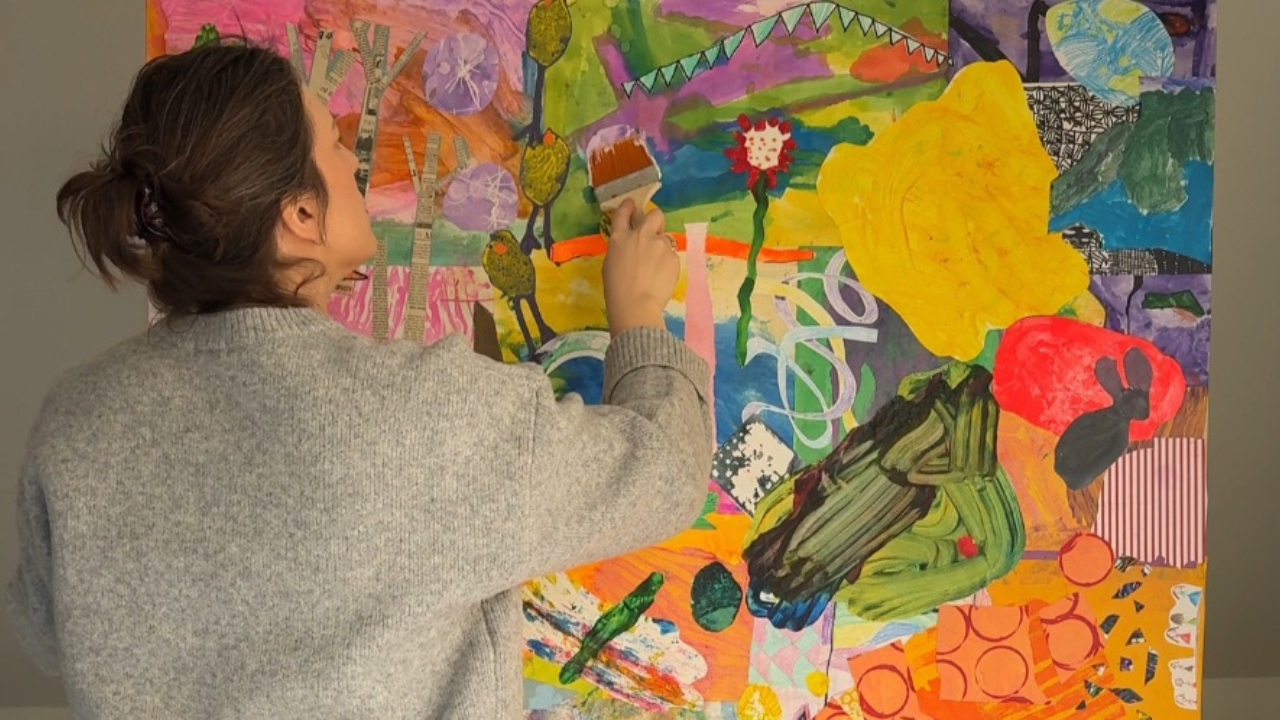
There's a particular kind of pile that lives in almost every home with a child in it. Maybe it's on top of the fridge. Maybe it's in a kitchen drawer that no longer closes all the way. Maybe it's in a clear bin in the garage labeled "Lily — 2019 to present" that you haven't opened in two years.
The pile of kids' artwork.
It grows quietly, one finger painting at a time, until one day you realize you're stepping over a rainbow on your way to the coffee maker and you think: I cannot keep doing this. But I also cannot throw any of it away.
If you've been there — and most parents have — I want you to know: you're not behind. There isn't something wrong with you. There just hasn't been a clear method.
Here are four real options, ranked from easiest to most meaningful, so you can pick the one that fits the kind of parent you are.
Option 1: Digitize it
The fastest fix. Take a photo of each piece (good lighting, neutral background) or scan the ones you really want to keep. Save them in a dedicated folder labeled by child and year. You can even turn the digital files into a photo book at the end of each year through a service like Artkive, Shutterfly, or Chatbooks.
Pros: Quick. Frees up physical space. Easy to share with grandparents.
Cons: A screen will never quite feel like the original. And digital files have a way of becoming their own kind of pile.
Option 2: Rotate a display
Set up a simple gallery wall, an art line strung with clothespins, or a single frame that you swap out every few weeks. The latest masterpiece gets the wall; last month's piece goes into the keep box.
Pros: Honors the work in real time. Makes the child feel seen.
Cons: Doesn't really solve the long-term keepsake question. You still end up with a box.
Option 3: Bind a yearly book
At the end of each year, choose 10 to 20 pieces, photograph them, and turn them into a hardcover book. One book per year. One shelf, eventually.
Pros: Compact. Beautiful. Easy to revisit.
Cons: Still a screen-to-page translation. You're choosing the best twenty, but you're not really transforming the work into something new.
Option 4: Turn it into one finished, hangable piece
This is the option most parents don't realize is available to them — and it's the one that tends to make the biggest emotional difference.
Instead of storing or scanning or archiving, you take a chosen handful of pieces and turn them into a single, cohesive collage that you actually hang in your home. The shapes, the colors, the lines, the half-finished drawings — they stop being a problem to manage and start being art on the wall.
That's what the Heirloom Collage Method teaches.
It's the same process I use for every commissioned piece — sort, compose, layer + glue, seal + finish — and it's designed so you can do it yourself, in your own home, at your own pace, even if you've never made art before.
How to choose what's right for you
If you want the lowest-effort option, digitize.
If you want it visible day-to-day, rotate a display.
If you want a quiet, organized archive, bind a yearly book.
If you want one piece you'll point to ten years from now and say "that's the year she discovered orange," make a collage.
Most of the families I work with end up doing a combination. They digitize the bulk, hang a rotating piece, and once or twice in a child's life, they make one heirloom collage to mark a season.
The thing nobody says about kids' art
One day, sooner than feels possible, your child will stop making this. The thick crayon lines and the spelling-mistake captions and the suns with eyelashes — those are a specific child, in a specific year, who exists only right now.
You don't have to save all of it. But you do get to decide whether the part you keep ends up in a bin you never open, or on a wall you walk past every day.
That's the choice.
And it's a choice you can make this weekend if you want to.
Ready to make something with all that art?
The Heirloom Collage Method is a self-paced e-course that walks you through the exact process I use for every commissioned piece. About an hour of video. Seven modules. Lifetime access. $99.
Stay connected
A little creativity, a little encouragement, and plenty of inspiration delivered right to your inbox